
Term 3 Dates: 11th July to 26th September. Join Selective Discussion Group. Stay Connected with us.

Build strong foundations from the very beginning.

Pre-Uni New College Victoria's Primary programs support school students from Year 1 to Year 6 through a structured and balanced academic pathway.

About the Program

Primary Learning Foundations

Across the Primary pathway, students develop four core learning areas: Writing, English, Mathematics and General Ability. Age-appropriate lessons build essential literacy, numeracy, communication and reasoning skills progressively from Year 1 to Year 6.

Together, these four areas provide a balanced academic foundation that supports school learning, builds confidence and prepares students for future academic pathways.

W
Writing
E
English
M
Mathematics
G
General Ability
Course Details

What each course covers.

Year 1 EMG Course

Test & Value

Year 1 EMG helps young learners reinforce the foundations of their learning and begin building the reading, numeracy and reasoning confidence needed for future assessments. Lessons focus on age-appropriate academic habits in a nurturing, structured environment.

What students practise
  • Reading skills
  • Spelling and vocabulary
  • Comprehension
  • Sentence writing
  • Core numeracy and mathematics concepts
  • Basic verbal reasoning
  • Classroom learning routines
  • Weekly module work
This course helps students
  • build early confidence in English and Mathematics
  • develop stronger reading and comprehension habits
  • strengthen numeracy understanding
  • become familiar with basic reasoning questions
  • start forming consistent study routines
Best suited for

Year 1 students who are ready for structured extension work and would benefit from early support in English, Mathematics and General Ability.

Year 1 EMG Course

Test & Value

Year 1 EMG helps young learners reinforce the foundations of their learning and begin building the reading, numeracy and reasoning confidence needed for future assessments. Lessons focus on age-appropriate academic habits in a nurturing, structured environment.

What students practise
Reading skills
Spelling and vocabulary
Comprehension
Sentence writing
Core numeracy and mathematics concepts
Basic verbal reasoning
Classroom learning routines
Weekly module work
This course helps students
build early confidence in English and Mathematics
develop stronger reading and comprehension habits
strengthen numeracy understanding
become familiar with basic reasoning questions
start forming consistent study routines
Best suited for

Year 1 students who are ready for structured extension work and would benefit from early support in English, Mathematics and General Ability.

Year 2 WEMG Course

Writing, English, Mathematics & General Ability Foundations

Year 2 WEMG introduces students to a broader academic program covering Writing, English, Mathematics and General Ability. The course helps students build a solid foundation for school assessments, future extension work and scholarship-style learning pathways.

What students practise
Writing structure and idea organisation
Reading comprehension and multiple-choice questions
Vocabulary in context
Mathematical concepts and problem solving
Verbal reasoning
Non-verbal reasoning
Weekly homework and revision
Future assessment-style questions
This course helps students
improve confidence in writing and reading
strengthen maths accuracy and understanding
build general ability and reasoning skills
develop stronger independent learning habits
prepare gradually for future academic challenges
Best suited for

Year 2 students who are ready to strengthen core academic skills and begin more structured work across English, Mathematics, Writing and reasoning.

Year 3 WEMG Course

Core Skills, NAPLAN Readiness & General Ability

Year 3 WEMG supports students as academic expectations become more demanding. Students build their skills across Writing, English, Mathematics and General Ability while developing confidence for NAPLAN-style tasks and more challenging classroom work.

What students practise
Reading comprehension
Multiple-choice English questions
Vocabulary and grammar
Mathematical theory and problem solving
Verbal and non-verbal reasoning
Integrated writing practice
Critical thinking
Homework and revision
This course helps students
build stronger NAPLAN-style readiness
improve reading comprehension and accuracy
strengthen maths problem-solving skills
approach general-ability questions with confidence
develop more consistent study routines
Best suited for

Year 3 students who need stronger foundations across core subjects or early exposure to general-ability and reasoning tasks.

Year 3 Writing Course

Structured Writing for School and NAPLAN Success

Year 3 Writing provides focused instruction that helps students plan, structure and improve their written work. Lessons develop clear sentences, connected paragraphs and confident responses across age-appropriate text types.

What students practise
Planning before writing
Sentence and paragraph structure
Narrative and persuasive writing
Grammar, spelling and punctuation
Vocabulary and descriptive language
Editing and proofreading
This course helps students
organise ideas before writing
write clearer, more connected paragraphs
respond confidently to school and NAPLAN-style prompts
improve grammar, punctuation and vocabulary
edit work more independently
Best suited for

Year 3 students who would benefit from dedicated writing practice, clearer structure and more confidence expressing their ideas.

Year 4 WEMG Course

Upper-primary Skill Extension

Year 4 WEMG helps students extend beyond basic schoolwork by strengthening English, Mathematics, General Ability and integrated writing skills. The course supports stronger academic performance while preparing students for the higher expectations of upper primary.

What students practise
Reading comprehension
Vocabulary, grammar and text analysis
Mathematics concepts and formulas
Multi-step problem solving
General Ability
Critical reasoning
Integrated writing practice
Online revision and quizzes
This course helps students
improve comprehension and text-based accuracy
strengthen maths foundations before Year 5 and Year 6
develop critical thinking and reasoning ability
review mistakes and improve accuracy
build more consistent study routines
Best suited for

Year 4 students who are ready for upper-primary extension and would benefit from stronger comprehension, mathematics and reasoning support.

Year 4 Writing Course

Writing Structure, Style & Expression

Year 4 Writing develops stronger control of structure, language and style. Students receive dedicated practice across narrative, persuasive, descriptive and explanatory writing, with guidance on planning, drafting and editing.

What students practise
Narrative and persuasive writing
Descriptive and explanatory writing
Paragraph cohesion and sequencing
Sentence variety and vocabulary
Planning and drafting
Editing for clarity and accuracy
This course helps students
write with clearer structure and purpose
adapt language for different text types
develop stronger vocabulary and sentence control
expand and support ideas effectively
review and improve completed work
Best suited for

Year 4 students who need focused support to develop stronger written expression across a range of school text types.

Year 5 WEMG Course

Advanced Primary Extension

Year 5 WEMG focuses on advanced upper-primary learning in Writing, English, Mathematics and General Ability. Students extend their core skills through increasingly challenging tasks, structured problem-solving and deeper analytical thinking.

What students practise
Reading comprehension and text analysis
Advanced vocabulary and grammar
Mathematical reasoning and problem solving
Critical thinking
Verbal and non-verbal reasoning
Analysing arguments and assumptions
Integrated writing practice
Data, graphs and spatial reasoning
This course helps students
work confidently with more challenging academic material
strengthen comprehension and reasoning before Year 6
improve speed, accuracy and problem-solving approach
build a stronger foundation for future exam preparation
Best suited for

Year 5 students who are academically capable, ready for extension work or would benefit from more challenging upper-primary study.

Year 5 Writing Course

Advanced Written Expression & Composition

Year 5 Writing gives students dedicated time to develop mature ideas, purposeful structure and precise language. Lessons strengthen the planning, drafting and editing skills required for more demanding upper-primary writing tasks.

What students practise
Advanced narrative and persuasive writing
Audience, purpose and tone
Strong introductions and conclusions
Paragraph cohesion and idea development
Precise vocabulary and sentence variety
Independent editing and redrafting
This course helps students
develop more sophisticated written responses
support ideas with relevant detail and evidence
write with greater clarity, fluency and control
manage timed and extended writing tasks
prepare for Year 6 writing expectations
Best suited for

Year 5 students seeking focused writing extension, stronger composition skills or greater confidence with demanding written tasks.

Year 6+ Course

Advanced Learning & High-school Readiness

The Year 6+ course combines advanced academic practice with high-school readiness. Students consolidate key knowledge, work through challenging question types and build the accuracy, pacing and confidence required for advanced learning and a strong transition to secondary school.

What students practise
Timed reading and comprehension
Advanced mathematical problem solving
Verbal and non-verbal reasoning
Exam-style question analysis
Writing under structured conditions
Time management and checking strategies
Review of errors
High-school transition skills
This course helps students
apply effective learning and test strategies
improve speed without sacrificing accuracy
approach unfamiliar questions methodically
reinforce knowledge before key assessments
prepare for advanced learning and secondary school
Best suited for

Year 6 students seeking advanced academic practice and a structured, confident transition into secondary school.

What students will study

Writing

The writing module helps students organise ideas, develop clear structures and strengthen critical thinking and reasoning skills.

English

English lessons focus on reading comprehension, vocabulary and answering a range of text-based questions.

Mathematics

Mathematics lessons build a thorough understanding of key concepts, principles and problem-solving strategies.

General Ability

Lessons develop critical thinking, problem-solving and general knowledge through puzzles, discussion and exploration.

Face to Face Lesson

Face to Face Lesson

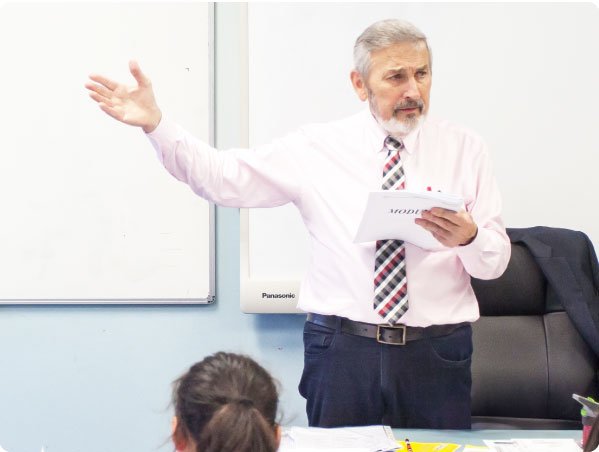
Face-to-face lessons offer a dynamic, interactive educational experience, fostering direct engagement with experienced educators and peers. These sessions encourage active participation, critical thinking, and collaborative learning, tailored to nurture each student's curiosity and academic growth.

With a focus on personalised instruction and real-time feedback, our approach enhances understanding, builds confidence.
Up-to date Resource

Up-to date Resource

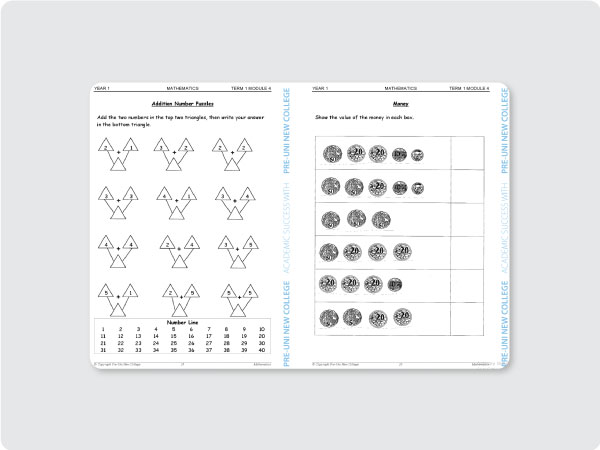
Stay ahead of the curve with our up-to-date resources. The educational landscape is ever-evolving, and so are we.

Our materials are continuously reviewed and updated to align with the latest syllabus changes and educational best practices.

Managing Student Progress

Managing Student Progress

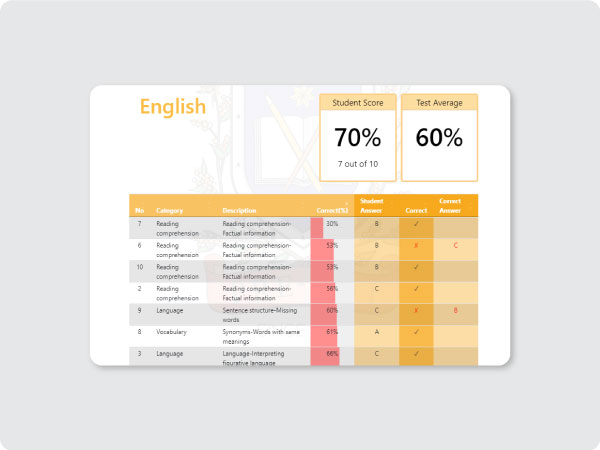
Track growth and progress with our systematic approach to managing student development. Through personalised progress management, we ensure that every student receives the support they need to excel.

How our on-campus program works?

  1. STEP 1

    Lesson

    In this initial stage, students attend weekly theory lessons that introduce new concepts and build foundational knowledge. Teachers use lectures, multimedia presentations, and interactive discussions to engage students and motivate them throughout the lesson. Active participation, question-asking, and note-taking are encouraged to enhance understanding of the material.

  2. STEP 2

    Complete Weekly Homework and S.O.Q

    Following the lesson, students must complete their assigned homework to reinforce their learning. This includes reading assignments, problem-solving tasks, essays, or projects that apply their knowledge. Additionally, students engage with the S.O.Q (Special Online Quiz) to test their comprehension and retention of the material. Emphasis is made on the need to review and memorise new information to solidify learning.

  3. STEP 3

    Watch VOD

    Students use Video On Demand (VOD) to review the material at their own pace. This enables them to revisit the lesson, clarify doubts, and address any missed content. VOD provides the flexibility to pause, rewind, and rewatch parts of the lesson, ensuring a thorough understanding of complex topics.

  4. STEP 4

    Term Progress Test

    Students undertake a term test to assess their understanding of the material covered throughout the term. This comprehensive test evaluates topics taught during the term and measures students' grasp of the subject matter. It serves as a formal assessment of learning progress and identifies areas needing improvement. In turn, it offers valuable feedback on student's performance and achievement of key learning outcomes.

  5. STEP 5

    Review the Term Progress Test

    The final step involves a detailed review of the test. Students analyse questions they answered incorrectly to understand their mistakes and refresh on the content. This review is crucial for consolidating knowledge, improving test-taking strategies, and preparing for future assessments. Teachers assist with explanations and additional practice to ensure confidence in the material prior to class commencing the following term.

Pre-Uni New College Primary Courses: More Than Just a Class — A Total Learning Solution

Everything included with Primary courses, laid out in one place — grouped by how often it happens, from the weekly study rhythm to term milestones and always-on resources.

The Study Rhythm

Module Answers (Weekly)

Each week's module answers are uploaded on Saturday and available until the last day of the next school holiday. You can download them under 'Material' menu at the top navigation bar. Please use the module answers after you made the first attempt to finish your module questions.

Video Lessons (Weekly)

Every question in the main textbook is explained audibly in the video lessons. Click the 'Video Lesson' menu at the top navigation bar and watch the lessons to review recent modules and reinforce concepts. Please note that each video lesson is available for the next three (3) weeks from Saturday.

Fortnightly Online Quiz

The Special Online Quiz is a series of quiz to measure students' understanding of the previous modules in English, maths and general ability. Go to the online quiz under 'My Test' menu at the top navigation bar. Four (4) quizzes open in Week 2, 4, 6 and 8 of the term. Each subject contains 10 questions. It will be available until the end of the term.

Vocabulary Test (Weekly)

Cyberschool is offering the weekly vocabulary test until the end of the term. To take the test, click 'My Test' menu at the navigation bar and go to 'Online Test' page. Click on 'Vocabulary Test' tab. Strong vocabulary skill is critical as it improves all areas of communication, leading to high scores in reading and writing tests.

Term Progress Test (Week 7)

Students take the term test during Week 7 for assessment and subsequent reporting. To take the test, log in to Cyberschool during the test window, click the 'My Test' menu at the navigation bar, and go to the 'Term Progress Test' page.

Term Test Review (Weeks 10–11)

Cyberschool provides access to the 'Test Review' service during Weeks 10–11. Students can revise the English, Maths, and General Ability (G.A.) term test questions they answered incorrectly to build a solid foundation before the next term.

My Result & Reporting (During & End of Term)

All your test results, including term tests and weekly tests, are available on the 'My Result' page under the 'My Page' menu during the course period.

G.A. for Scholarship Test (During the Term)

The 'G.A. Practice for Scholarship Test' menu is designed for students who want to build a solid foundation in general ability skills, especially in preparation for AAS, ACER or Edutest private school scholarship tests. Students can access it from the 'My Test' menu at the navigation bar. The course covers both verbal and non-verbal reasoning skills, and each section is categorised into a comprehensive number of question types. Students can study almost all possible question types and complete a variety of practical, challenging and mind-stimulating questions.

Reading 310 (During the Term)

Reading 310 is an online self-paced test practice course designed to help students enhance their reading skills. Each test contains a comprehensive number of reading questions covering inference skills for short passages, true or false questions, gapped texts and more. Students can attempt up to 10 tests during the term. By completing the tests, students can thoroughly study important question types and complete a variety of challenging reading-skill questions.

Course Overview

Four subjects. One balanced pathway.

Core subjects are covered through the appropriate year-level program — EMG, WEMG or 6+ — giving students broad academic development across the Primary pathway.

W
Writing
Year 1–6 · All terms

Students learn how to organise ideas, use stronger vocabulary and write with clearer structure — building sentence control, paragraph development and different writing styles appropriate to their year level.

Focus areas include:
  • · Sentence structure and grammar
  • · Paragraph and creative writing
  • · Persuasive writing
  • · Planning and editing
  • · Vocabulary development
  • · Clear expression of ideas
E
English
Year 1–6 · All terms

Students practise comprehension, vocabulary, grammar and text-based questions to strengthen their understanding of written texts and become more confident readers and thinkers.

Focus areas include:
  • · Reading comprehension
  • · Vocabulary building
  • · Grammar and spelling
  • · Inference and main idea
  • · Short-answer responses
  • · Exam-style reading practice
M
Mathematics
Year 1–6 · All terms

Students develop stronger number skills, mathematical understanding and problem-solving strategies — designed to help students understand concepts clearly before applying them to different types of questions.

Focus areas include:
  • · Number skills and operations
  • · Fractions, decimals and percentages
  • · Measurement and geometry
  • · Patterns and algebraic thinking
  • · Word problems and multi-step solving
  • · Accuracy and working-out methods
G
General Ability
Year 1–6 · All terms

Students strengthen reasoning, logic and problem-solving skills — especially important for students preparing for future Selective School and Scholarship-style exams.

Focus areas include:
  • · Verbal and non-verbal reasoning
  • · Patterns and sequences
  • · Analogies and logical thinking
  • · Problem-solving strategies
  • · Visual reasoning
  • · Speed and accuracy
Student Outcomes

What students gain from our Primary courses.

1
Stronger academic foundations

Students build essential literacy and numeracy skills that support their school learning and future academic growth.

2
Confidence across core subjects

Regular practice helps students feel more prepared in English, Writing, Mathematics and reasoning-based questions.

3
Better learning habits

Students develop consistency, focus and confidence through structured weekly lessons and guided practice.

4
Step-by-step progress

Each lesson is designed to help students build skills gradually, so learning feels manageable and purposeful.

5
Preparation for future exam pathways

The Primary pathway helps students develop the skills needed for later Selective School and Scholarship preparation.

6
Balanced subject support

Instead of focusing on only one subject, students receive well-rounded academic development across multiple key areas.

Our Approach

How our Primary lessons work.

Each Primary lesson is structured to help students learn, practise and apply new skills.

Concept learning

Students are introduced to key skills and topics through clear teacher explanation.

Guided examples

Teachers model how to approach questions and show students the steps needed to solve problems or build stronger responses.

Targeted practice

Students complete carefully selected activities to strengthen accuracy, confidence and understanding.

Review and correction

Common mistakes are reviewed so students can understand how to improve.

Ongoing skill development

Across the term, students continue to build knowledge and confidence through regular practice.

Who It's For

Who is this course for?

Our Primary courses are suitable for students who:
✓ Are in Year 1 to Year 6
✓ Need stronger foundations in English and Mathematics
✓ Want to improve writing and comprehension skills
✓ Need more confidence with schoolwork
✓ Benefit from structured weekly learning
✓ Want to develop reasoning and problem-solving skills
✓ May prepare for Selective School or Scholarship exams in the future
✓ Need extension beyond regular school learning

Frequently asked questions.

A strong start for future success.

Our Primary pathway is more than a weekly tuition class. EMG, WEMG and 6+ provide structured learning that helps students build the academic confidence and core skills they need before moving into higher-level study.

Burwood: 279 Burwood Highway, Burwood East VIC 3151 | Oakleigh: Level 1, Suite 2/77 Atherton Rd, Oakleigh VIC 3166